 M6
M6Accountability partner: how to choose one and make it work
An accountability partner is a person who knows your goal and checks in on whether you are doing the work. Choose someone reliable who is not your boss, agree on a rhythm, share only what they need to see, and keep the contact short. One partner is enough, and the arrangement should be easy to end.
Coming soon to iPhone
What is an accountability partner?
It is someone you tell your goal to and who asks you how it is going. The general idea of accountability is answerability, being expected to give an account of what you did (Wikipedia: Accountability). A partner makes that expectation personal and regular.
A good partner does not manage your life. They make it harder to disappear. Their job is to ask, not to judge.
Who should I pick?
The best partner is someone you trust to be honest and who has time to reply. The table compares common options.
| Option | Good because | Watch out for |
|---|---|---|
| Friend | Knows you, easy to talk to | May go soft on you |
| Peer with a similar goal | Understands the effort, can swap roles | Both of you can slip together |
| Colleague | Shared context, regular contact | Work and personal life can mix |
| Coach or mentor | Experience and structure | Cost and scheduling |
| Stranger or online group | Neutral, no history | Weaker commitment |
How do I set it up?
- Say what you want help with: consistency, work or study, fitness, business or a reset.
- Pick a rhythm: daily, weekdays, three times a week or weekly. Shorter intervals suit new routines.
- Agree on what a check-in is: one message with what you did and what is next.
- Decide what they can see and what stays private.
- Decide what happens after a gap: one gentle nudge, not a chase.
- Agree on an end date or a review point, so either of you can step away without awkwardness.
What should I share?
Share the minimum. Whether you showed up today and which day you are on is usually enough. Task names, goal names or focus time can be added later if it helps. Notes, income and private reflections are rarely useful to a partner and are better kept to yourself.
Be careful with metrics. A weekly number can turn into a score, and a score invites competition. Start with a yes or no signal.
What mistakes make it fail?
- Choosing someone who is too busy to answer.
- Reporting everything. Long reports tire both people.
- Using the partner as a manager. They are there to ask, not to assign work.
- No rule for gaps, so one skipped check-in becomes silence.
- More than one partner. Too many voices dilute the contact.
What does a good check-in look like?
Keep it to a few lines. This format works in a chat or in an app.
- What I planned: one line.
- What I did: one line, with a number if there is one.
- What got in the way: one line, or "nothing".
- What is next: one line.
How do I end the arrangement kindly?
Say it directly and thank them. A message such as "This was useful, and I am going to try it on my own now" is enough. Agree to a last check-in on the review date you set at the start. Ending on purpose is better than letting the contact fade, because it leaves the door open for another round later.
Do I need a partner at all?
Not always. Some goals work fine with a private record of progress and a weekly review. A partner helps most when you tend to drop goals quietly, when you need someone to ask the awkward question, or when the goal depends on turning up regularly. Try a short trial of two or three weeks and decide from there.
How does M6 handle accountability?
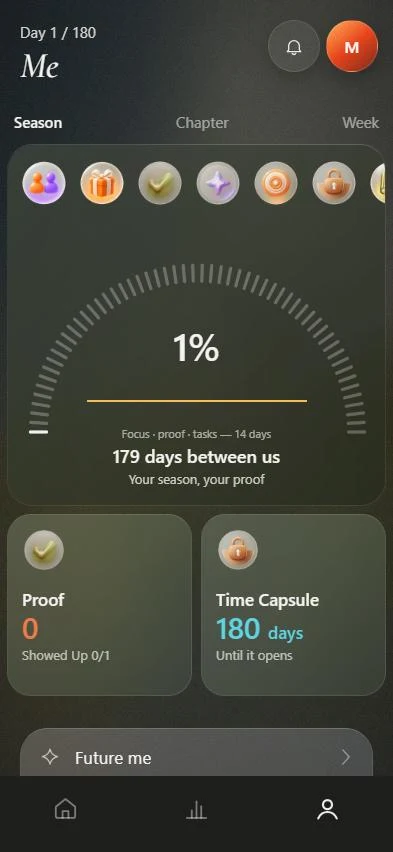
M6 Partner follows these rules. You invite one person by link, by default they see whether you showed up today and your day number, and you open anything else yourself, with a confirmation each time. Notes, income values, voice messages and the time capsule can never be shared. A partner sends reactions and nudges. There is no chat, feed or leaderboard.
Read the details on the partner feature page.
Frequently asked questions
What is an accountability partner?
A person who knows your goal and regularly checks whether you are doing the work. They ask and support, and they do not manage you.
How often should we check in?
Daily or on weekdays for new routines, weekly for long-term goals. M6 offers daily, weekdays, three times a week or weekly.
Should my partner be a friend or a stranger?
A friend is easier to talk to, a stranger is more neutral. The best choice is someone reliable who will tell you the truth kindly.
Is there an accountability partner app?
M6 has an optional Partner feature in which you invite one person and choose what they see. Reactions and nudges only, with no chat.
What if my partner stops replying?
Send one nudge, wait a week, then talk. If it is not working, end the arrangement and try someone else.
Keep exploring
PartnerInvite one person. You choose what they see. Reactions only, no chat.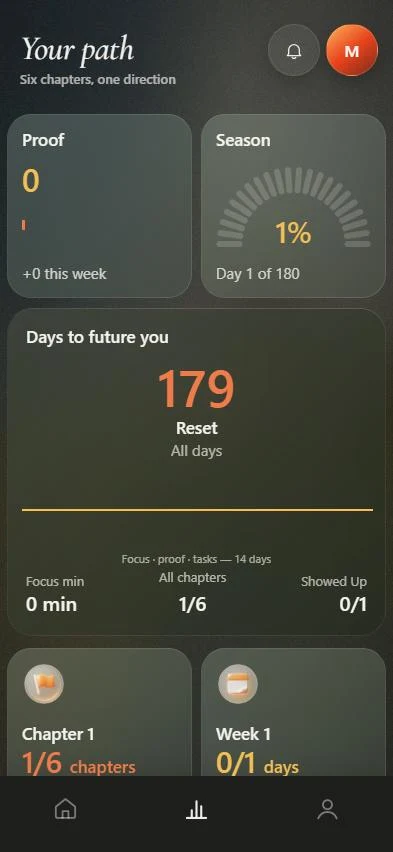 6-month goal planOne outcome, six checkpoints, a small daily routine and a weekly review.
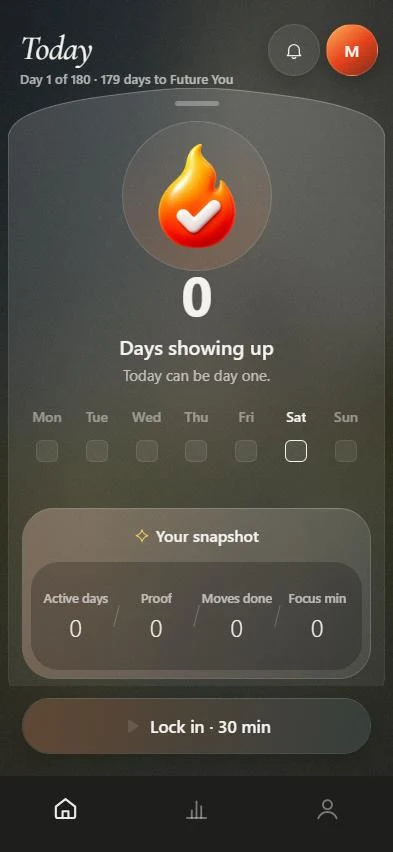 180-day challengeDaily minimum, checkpoints every 30 days and a weekly review.Privacy PolicyNo account. Data on your device. Server only for partner and notifications.